
College Counseling Office





Preparing Our Students for Meaningful Post-Secondary Options
Ridgeview prepares our students to succeed in their post-secondary plans by offering rigorous coursework that prioritizes critical thinking and a deep engagement with ideas. Our classical liberal arts education promotes a strong work ethic and perseverance. During their time at Ridgeview, our students complete four thesis projects. The senior thesis is a capstone project for which students must research, write, and defend a twenty-five-page paper in which they address the question, “What is essential to the good life?”
In addition, our robust outdoor program and intentional character development help nurture in our students resilience, integrity, and stewardship. Ridgeview students are thoughtful, engaged community-members who are well-prepared for college and beyond.
Ridgeview’s College Guidance Program: Overview
Ridgeview students are well known and benefit from personalized guidance throughout the college process.
The Ridgeview College Guidance program engages students and families beginning in the 8th grade, though our process begins in earnest during students’ junior year. Junior year kicks off with the College Retreat. Throughout the year, juniors meet with our college counselor individually, and they take the Vocation, Career, & College course. Ridgeview also offers in-house, elective SAT test preparation.
Seniors receive responsive, individualized help on every aspect of their applications, including building a reasonable list of colleges to apply to, completing strong applications, and crafting meaningful essays. Seniors and parents of seniors meet with our college counselor both in group meetings and individually on an on-going, as-needed basis.
Our college guidance program is
Responsive & Individualized
A Timeline for the College Admissions Process
A successful college process is one that is built upon self-reflection, curiosity, and an understanding of one’s goals, priorities, and values. The most important thing that students can do to prepare for the college process is to explore their academic and extracurricular passions, work hard in their classes, find meaningful ways to spend time outside of school, and engage in their community.
Here are some more specific ways students can engage:
-
Fall/Winter/Spring:
Do as well as you can in your classes. Find the balance between rigor and achievement. This is a theme across all four years of high school!
Build connections with your teachers and your peers.
Explore activities and extracurriculars. How can you engage in your community?
Attend the College Planning 101 meeting at Ridgeview, and choose courses for the next year that continue to challenge you appropriately.
Summer:
Consider how to spend the summer after your 9th grade. It is a great time to explore who you are, to dive more deeply into interests, and to develop as a human.
-
Fall/Winter/Spring:
Remain invested in your academics and activities. Remember, it’s not too late to explore new activities and to continue to hone your academic skills!
Hone in on the activities and academic areas in which you are particularly interested. Focus on depth. Is there a way you can be a leader in activities? Is there a camp/class/club/internship/job or other opportunity that will help you explore some of these activities in depth?
Attend the College Planning 101 meeting at Ridgeview, and choose courses for the next year that continue to challenge you appropriately.
Take a couple of college tours. Now is the time to EXPLORE and to start making college real.
Summer:
Choose ways to spend your time that are engaging and interesting and help you deepen your understanding of what makes you tick as a student and as a human. Read! Read! Read!
-
Fall/Winter:
Stay focused on academics and your important extracurricular activities. This is the most important year for you academically as it relates to college admissions. Strike the important balance of achievement and challenge. Do as well as you can in your classes, and continue to invest in the relationships with your teachers and the community.
Take the PSAT. Use the scores as preliminary “temperature” on your test-taking. Use your results to help guide your decisions about college test preparation. Are there areas of particular strength and/or weakness? Giving yourself a long runway to prepare for tests is helpful.
Consider taking a test-prep course here on campus for the SAT or on your own for the ACT, and map out a timeline for testing.
Reflect on the things that make you tick, what ignites your curiosity, which environments best suit you, and what your long-term goals are. Be thoughtful about how you spend your time.
Officially kick off your college process at the Junior College Retreat!
Spring:
It’s time to translate the self-reflection that you’ve been engaging in into action in the Vocation, Career, and College-Planning course.
Plan some college visits. Seeing a variety of campuses can help you hone in on what types of colleges (small, medium, large; rural/urban, etc.) that will best suit you.
Take advantage, too, of college rep visits to Ridgeview.
Attend a meeting with your parents and your college counselor at Ridgeview to develop a preliminary list of schools.
Draft your college essay. Ask for feedback. A good college essay is never written in a sitting.
Cultivate your relationships with your teachers. Consider who among them would be best able to address your academic work in a teacher recommendation. Save paper and work from those classes, as it’s helpful to be specific about what you’re proud of in those courses. *Officially requesting recommendations can happen in the fall of senior year, but you should have a sense of who you’ll be asking by the spring.
Summer:
Find a meaningful way to spend your summer. A job? An internship? A pre-college program?
Visit schools!
Consider signing up for a final round of SAT or ACT testing.
Read! Read! Read!
Refine your list of schools to which you’ll apply.
-
Fall/Winter:
Finalize your application list with your college counselor. A balanced list is the best way to mitigate stress in the process.
Come up with an application strategy with your college counselor. Should you consider applying early anywhere?
Refine your college essay.
Attend the Senior College meeting to keep on top of the nuts and bolts of applying: linking your Common App, etc.
Request recommendations from your teachers at least two weeks–but preferably much longer–in advance of your first deadline.
Complete the senior survey in Maia to help your recommenders write as strong a recommendation as possible.
Fill out and submit college applications on time.
Parents/guardians: submit the FAFSA.
Research and apply for local scholarships.
Remember, you are the driver of this process: make sure you respond to emails, check application statuses, etc.
Spring:
Revisit colleges to make your final choice.
Update your college counselor with any admission news, scholarship awards, etc.
Commit to ONE SCHOOL.
College Visits
One of the best things that Ridgeview students can do early on is to visit colleges to get a sense of what kinds of environments best suit them, even if they’re not necessarily interested in that particular school. Is the hustle and bustle of a big, urban campus appealing? Or does being a bigger fish in a smaller sea sound better? At Ridgeview, we’re fortunate to have so many institutions within driving distance, including one that is practically in our backyard! Exploring different institutions can help students hone in on their priorities in building a college list, even if they choose to go out of state.
Large Public Research Universities
Midsize Public Research Universities
U.S. Military Academies
Small Liberal Arts Colleges
Colorado College (private)
Fort Lewis College (public)
Religious/Faith-based Colleges
Regis University (Jesuit)
Naropa University (Buddhist)
Specialized/Technical Universities
Two-Year/Community Colleges
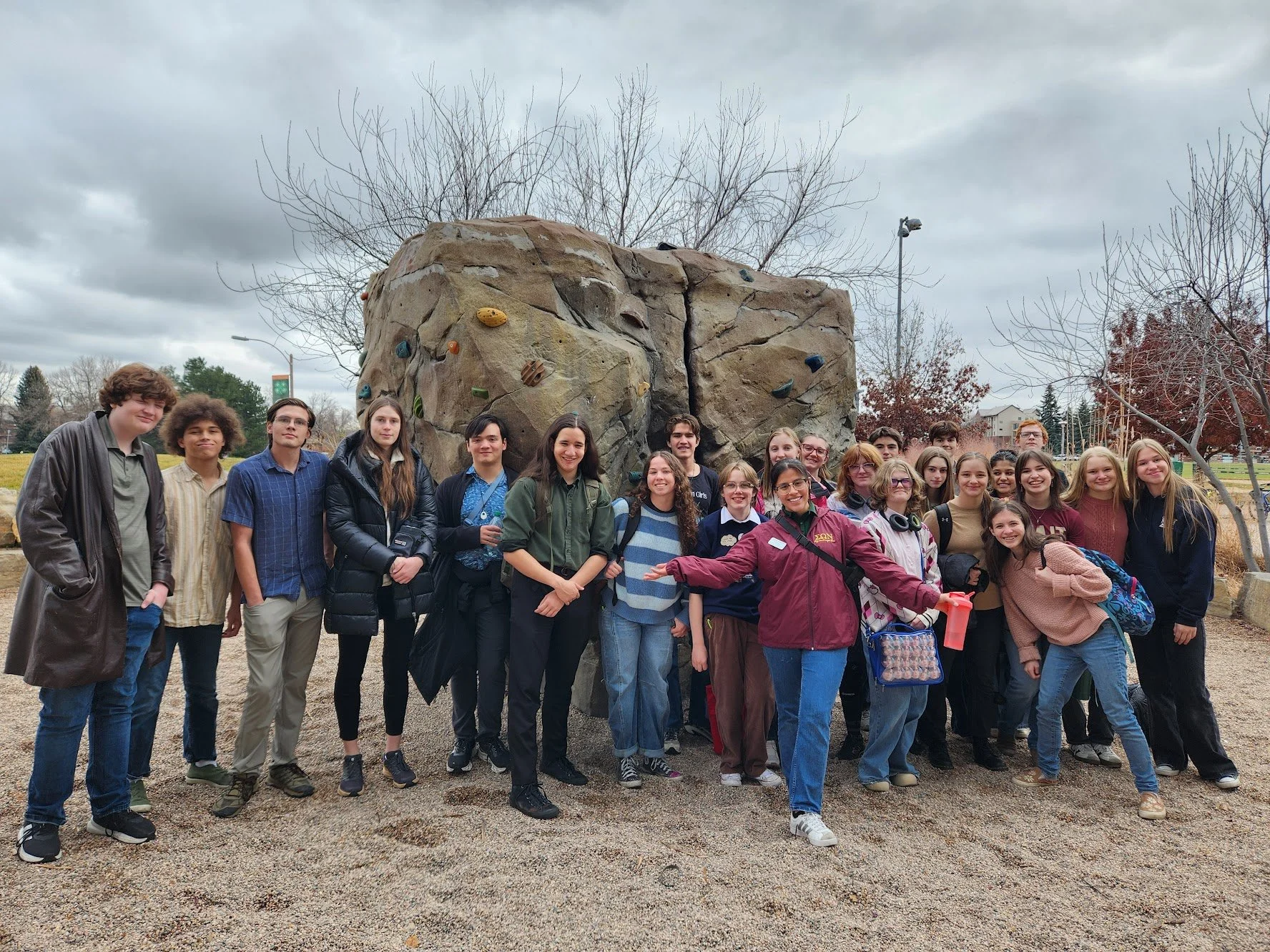
Ms. Olson, College Counselor
Admissions Rep Visits
Ridgeview hosts many college admissions counselors throughout the school year. See our upcoming scheduled visits below. Admissions counselors can make a request through Maia.